
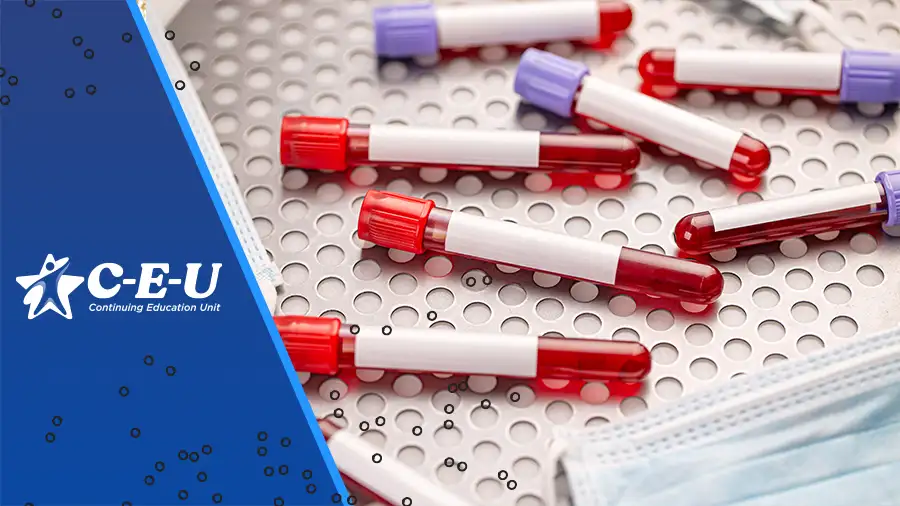
This course provides practical training on bloodborne pathogens, infection control, and the basic requirements of the OSHA Bloodborne Pathogens Standard. It reviews common bloodborne diseases, Standard Precautions, hand hygiene, personal protective equipment, exposure prevention, sharps safety, cleaning and disinfection, exposure reporting, and post-exposure response.
Although developed specifically for Florida Certified Nursing Assistants (CNAs), this course is also appropriate for Home Health Aides (HHAs), caregivers, direct care staff, and other healthcare professionals. The infection prevention, occupational safety, and bloodborne pathogen principles covered in the course are broadly applicable across healthcare and direct care settings.
Florida Certified Nursing Assistants are required to complete 24 hours of in-service training during each biennial renewal period. Bloodborne Pathogens and Infection Control are identified by the Florida Board of Nursing as subject areas that must be included within those required hours.
This course may supplement, but does not replace, employer-specific OSHA training, an employer’s Exposure Control Plan, or training on workplace-specific policies and procedures.
Developed by: Scott Strachan RN, BSN
Target Audience
CNA/HHA
Teaching Method
Self-directed learning completed independently, with scenario-based reflection.
Learner Objectives
Identify common bloodborne pathogens and their impact on health
Apply standard precautions and PPE to reduce exposure risk
Recognize transmission routes and high-risk caregiving tasks
Demonstrate proper handling and disposal of sharps
Respond appropriately to exposure incidents and follow post-exposure protocols
Overview
This course provides a comprehensive overview of bloodborne pathogens and infection control practices in caregiving environments. It focuses on real-world exposure risks, emphasizing the importance of consistent safety practices across all care settings, including home care, facilities, and community-based environments.
Topics include Hepatitis B, Hepatitis C, and HIV, along with modes of transmission, standard precautions, personal protective equipment, sharps safety, and post-exposure protocols. The course also reviews OSHA requirements and infection control responsibilities specific to caregiving roles.
By focusing on practical application and safety awareness, caregivers will develop the knowledge and confidence needed to reduce exposure risk, respond to incidents effectively, and maintain a safe environment for themselves and those they serve.
Disclosure
The planner(s) and author(s) of this educational activity have disclosed that there are no relevant financial relationships with any commercial interests related to the content of this course. This course is developed for educational purposes and does not receive commercial support.
Disclaimer
The information provided in this course is for educational purposes only and should not be construed as legal, financial, or professional advice. While every effort has been made to ensure accuracy, the content is not guaranteed to be free from errors or omissions. Participants are encouraged to consult with a qualified professional for specific advice related to their circumstances. The creators and presenters of this course disclaim any liability for decisions made based on the information provided.
We will send you a one-time access code.