
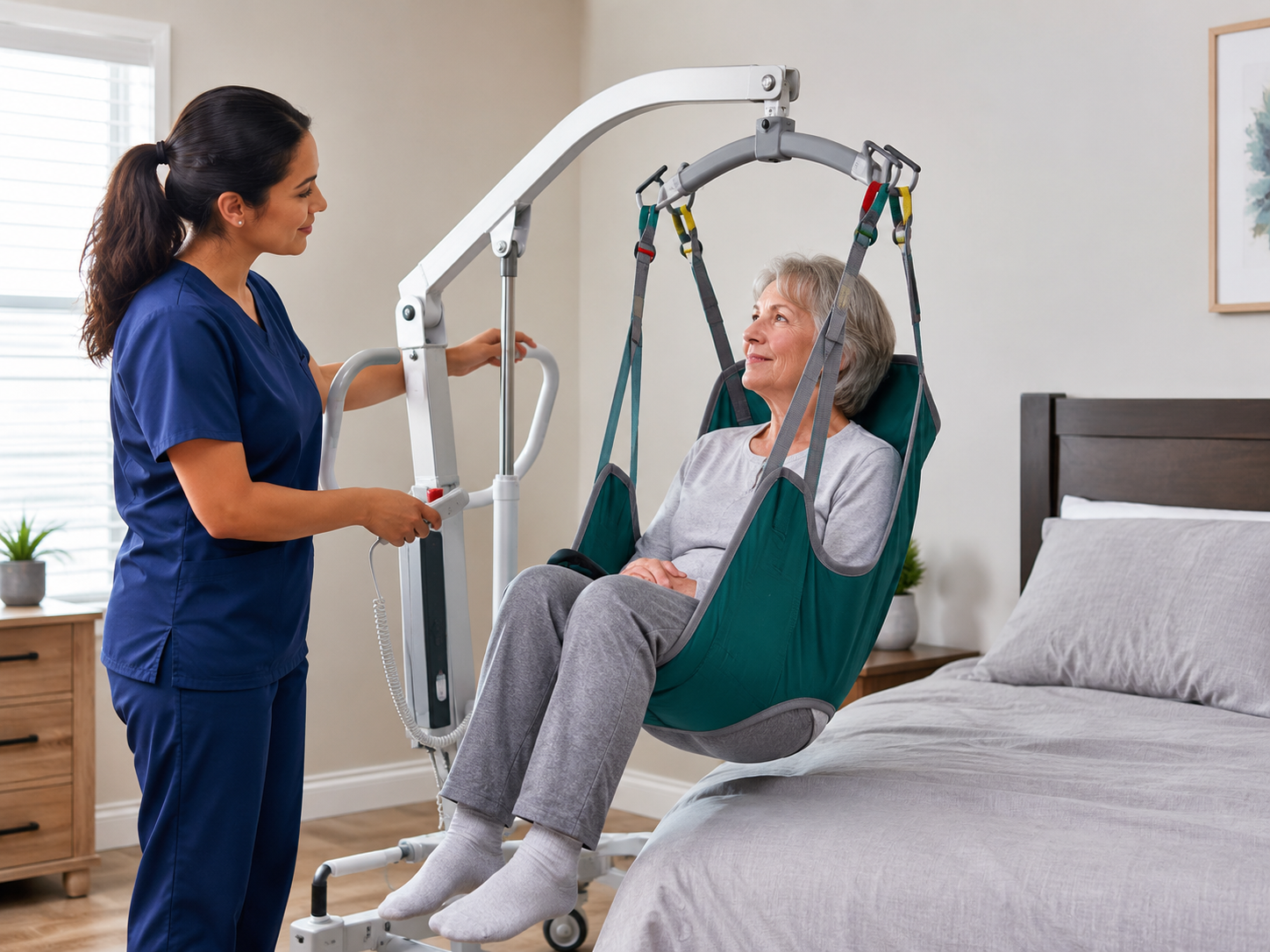
This course provides practical instruction on safe hoyer lift operation, transfer techniques, caregiver safety, and patient comfort during mechanical lift transfers. Participants will review common transfer situations, equipment considerations, communication techniques, documentation principles, and strategies to reduce injury risk in home care and facility settings.
Developed by: Scott Strachan RN, BSN
Target Audience
CNAs, caregivers, home health workers, nurse registry caregivers, office staff, nurses, and healthcare professionals involved in assisting individuals with mobility limitations.
Teaching Method
Self-directed learning completed independently, with scenario-based reflection.
Learner Objectives
Overview
Safe patient transfers are one of the most important responsibilities in caregiving and healthcare environments. Improper lifting techniques contribute to caregiver injuries, patient falls, skin injuries, and preventable emergencies. Mechanical lifts, including hoyer lifts, are commonly used to help reduce physical strain while improving transfer safety for individuals with significant mobility limitations.
This course reviews the practical use of mechanical lifts in home care and healthcare settings. Participants will learn about transfer preparation, sling selection considerations, communication strategies, positioning techniques, environmental safety, and common mistakes that can increase injury risk. Real-world caregiving scenarios are included to encourage observation and critical thinking.
The goal of this course is not to replace hands-on training or manufacturer instruction, but to strengthen caregiver awareness, safety practices, and confidence when assisting with mechanical lift transfers.
Disclosure
The planner(s) and author(s) of this educational activity have disclosed that there are no relevant financial relationships with any commercial interests related to the content of this course. This course is developed for educational purposes and does not receive commercial support.
Disclaimer
The information provided in this course is for educational purposes only and should not be construed as legal, financial, or professional advice. While every effort has been made to ensure accuracy, the content is not guaranteed to be free from errors or omissions. Participants are encouraged to consult with a qualified professional for specific advice related to their circumstances. The creators and presenters of this course disclaim any liability for decisions made based on the information provided.
We will send you a one-time access code.